Designing a Data-Driven Customer Experience
 Gül Elitok
2 min read

Customer experience is an ongoing journey, and it is imperative to recognize the uniqueness of each customer’s path. The value derived from customer experience extends to both our customers and our brand. The more strategically and meticulously we plan this journey, the more enjoyable we make our customers’ shopping experience, and the stronger presence we establish in their lives. To achieve this target, our most powerful tool is Designing a Data-Driven Customer Experience.
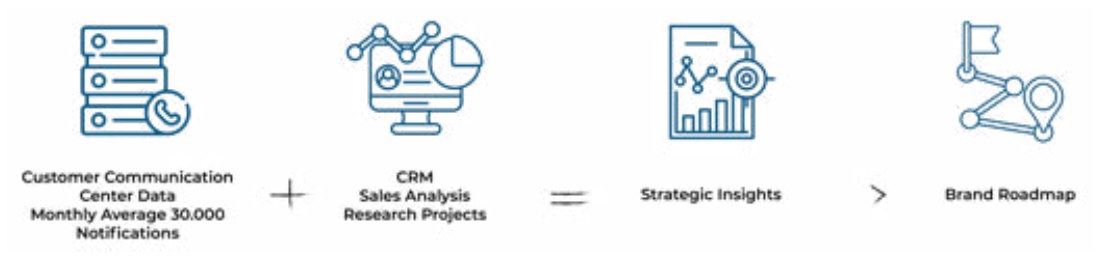
At Yves Rocher, we have approximately 4 million customers, and our Analytical CRM stands out as one of our most robust assets. By effectively utilizing the capabilities of big data and AI, we implement personalized campaigns/approaches specially designed for our customers. Furthermore, actionable insights from market research projects such as brand health, pre-post ad, mystery shopper, CX, U&A, and NPS contribute to a deeper understanding of customer needs and expectations.
While we diligently track the impact of our initiatives through metrics such as revenue, sales volume, and conversion rate, Net Promoter Score (NPS) is one of our most heavily relied-upon metrics. NPS, statistically acclaimed as the metric exhibiting the highest correlation to company growth, plays a crucial role in comprehending the resonance of our efforts in the customers’ world.
NPS also supports us in evaluating our performance in meeting customer expectations and identifying areas for improvement. Proactively, through our automated NPS system, we analyze end-to-end shopping experiences without awaiting customer outreach. Considering all three sales channels—our stores, website, or mobile application—we send an average of 250,000 surveys monthly to our customers using the Yves Rocher card.
The integration between NPS and our CRM database not only adds value but also forms the bedrock for detailed analysis based on demographics, location, and shopping habits. This strategic alignment provides a solid foundation for our analytical endeavors. In addition to all these analyses, the algorithm we take advantage of to figure out the invisible part of the iceberg is NLP which is used to classify text documents into predefined categories automatically. The integration seamlessly extends to the utilization of Natural Language Processing (NLP) algorithms, through which we derive valuable insights from open-ended questions. We specifically use it for sentiment analysis, topic detection, and category-based analysis.
Focusing comprehensively on all the data we gather from different platforms, we aim to improve the customer experience every day.
This article first appeared in Cloud4Feed’s CX Kaleidoscope Yearbook 2024 and is published here as written by the author. Part 6 of 8